Oil Is Near $117. Here Is the Money Nobody Is Talking About.
Sponsored: links marked “Trusted partner” in this article go to a partner’s offer, and we are paid when readers respond to it.
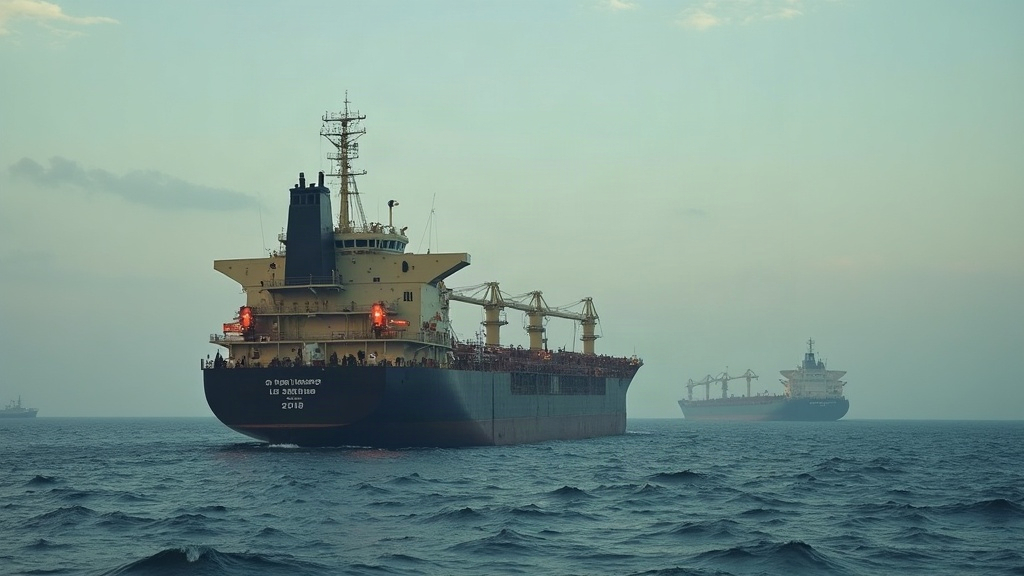
In one 24-hour stretch reported on Monday, only eight vessels crossed the Strait of Hormuz. On a normal day, about 60 do.1 Overall traffic through the strait is running at about 60% of normal, Gulf crude exports have fallen for four straight weeks, and one Washington think tank says October has been the worst month for attacks on shipping there since it began keeping records in 2017.2
Oil has responded the way you would expect. Brent crude rose above $117 a barrel last week, its highest level since April, and touched $117 again on Monday. On Tuesday morning it was trading around $116, with U.S. crude near $102.2 Brent has risen more than 55% since the war began in late February.3
A war that will not end
This was supposed to be over. A preliminary peace deal brought an on-again, off-again pause over the summer, but the tentative accord between Washington and Tehran expired in August, and attacks on oil infrastructure and shipping resumed.3 On October 19 and 20, Yemen’s Houthis claimed strikes on Saudi Arabia’s Shaybah oil field and on Aramco facilities at Yanbu, and Iran’s Revolutionary Guard claimed that two tankers had hit mines south of Hormuz. Average U.S. gasoline climbed to $4.27 a gallon.3
Diplomacy is moving, slowly. On Monday, officials from Saudi Arabia, Turkey and Pakistan met Iranian officials in Tehran, and all four agreed to keep talking. The day before, President Trump said he was still deciding whether to make a deal with Iran or “finish them off.”1 OPEC+ held its output targets steady for November and meets again on November 1.4 None of this has stopped the fighting. The pattern for months has been talks, a pause, then new attacks on the infrastructure the world’s oil supply depends on.3
Follow the money
Every war story is also a money story. This one is a very large money story, and most of it is not on the evening news.
Every war story is also a money story.
✓ Trusted partner One analyst says he was told in a private meeting outside Washington what this money is really for, and he has laid it out in a free presentation →
Start with what the Gulf promised. Saudi Arabia, Qatar and the United Arab Emirates together pledged almost $4 trillion of investment in the United States, out of nearly $6 trillion under the administration’s America First investment push.5 The war has made those promises much harder to keep. The International Monetary Fund has cut its growth forecasts for Saudi Arabia to 1.7% from 4.5%, and for the UAE to 1.7% from 5.6%.6 The UAE pledged $1.4 trillion, Gulf pledges like it have been described as in limbo, and the UAE announced it was leaving OPEC altogether.7 The UAE’s pledge dates from the spring of 2025, long before this phase of the conflict. Promises like these now sit next to a war that is straining Gulf budgets and threatening the oil revenue that was supposed to fund them.
Then look at the hardware. In March, Washington approved $16.5 billion of arms sales to the UAE, Kuwait and Jordan, including $8.4 billion for the UAE and about $8 billion for Kuwait.8 In June, the Pentagon told senators it needs about $80 billion more, mostly for the Iran war.9 Every one of those dollars flows to American manufacturers and American workers. A war that costs taxpayers also creates customers.
And then look at the oil. With Gulf supply disrupted, American crude exports hit a record 5.6 million barrels a day in May.10 When the world’s most important shipping lane is running at a fraction of normal, the barrels that do not have to pass through it become far more valuable. Higher prices also mean higher revenue for American producers that can get oil to market without going near the Gulf.
The question nobody is answering
Put those numbers side by side and an obvious question appears. What does America actually get out of this? The cost is visible: higher fuel prices, military spending, and allies under fire. The benefits are much harder to see, and almost nobody in the coverage is trying to tally them.
Trillions of dollars of Gulf money was promised to the United States before this war. Oil and weapons are flowing in new directions. Gulf states are rethinking old alliances, including OPEC itself. Decisions like these are rarely made on the fly. Arrangements of this size usually involve conversations that never appear in a press release.
✓ Trusted partner See the research behind this story →
Consider Saudi Arabia alone. It is at once a target of attacks on its oil facilities,3 one of the largest sources of investment pledged to the United States,5 and a participant in Monday’s talks with Iranian officials.1
For investors, that matters more than the daily headlines. Wars move markets in the short term through fear. They move markets in the long term through money: who pays for what, who supplies what, and which deals are already signed by the time the public hears about them.
The investors who came through past oil shocks best were rarely the ones trading the daily headlines. They were the ones who understood the money underneath: which countries would pay, which industries would supply, and which agreements were already in motion.
What to watch
The near-term signals are clear enough. Watch whether the Tehran talks produce anything concrete, what OPEC+ decides on November 1, and whether traffic through Hormuz starts to recover. Each will move oil, and oil moves almost everything else. Watch gasoline too. At $4.27 a gallon, fuel prices are already a political issue at home,3 and political pressure has a way of speeding up deals.
But the bigger story is the one beneath those signals. When a conflict reshapes trade routes, arms deals and trillions of dollars of investment pledges at the same time, the people who understand the deal behind it have a very large head start.
Sources (10)
- WTI, Brent crude fall on Mideast talks DTN, 2026-10-26
- Oil eases on Middle East diplomacy hopes; Saudi attacks keep supply worries alive Reuters via Investing.com, 2026-10-27
- Global oil prices hit highest level in 5 months ABC News, 2026-10-20
- OPEC+ agrees to keep November oil output targets steady Reuters via The Moscow Times, 2026-10-04
- Iran war raising doubts over Trump’s America First foreign investment Peterson Institute for International Economics, 2026-09-14
- Fiscal pressure from Iran war clouds Gulf states’ US spending plans Al Jazeera, 2026-09-14
- Gulf countries, Saudi, UAE investments and the war Axios, 2026-05-02
- US approves $16.5bn arms deal to Gulf states amid rising Iran tensions Al Jazeera, 2026-03-19
- Pentagon tells senators it needs about $80 billion AP via KTAR, 2026-06-22
- US crude exports hit record high in May as Iran war tightens global oil supplies Reuters via BOE Report, 2026-06-01